
The engineering behind intelligence.
Sensors, models, control logic and the people who run them, designed together and tested on the roads they are meant for.
From street to signal
Every MAARG system follows the same road: sense, understand, decide, act, inform. Scroll to follow it.
Sense
Cameras, vehicle detectors and controllers report what is happening at each junction.
Edge devices · video · loop and radar detectors
Understand
Computer vision and data models turn raw feeds into vehicles, queues, speeds and incidents.
Detection · tracking · event recognition
Decide
Control logic chooses signal timings, corridor priorities and alerts, within rules engineers set.
Adaptive control · corridor coordination · thresholds
Act
Signals change, green corridors open, and operators get the incidents that need a person.
Signal commands · operator workflows · audit trail
Inform
Message signs, apps and navigation partners tell people what changed and what to do.
VMS · mobile · open APIs
Engineering principles
Problem first
We start from a junction, a control room or a commute, and only then choose the technology.
Made for Indian roads
Mixed traffic, dense junctions, monsoon rain and dust are the design case, not the edge case.
Edge and centre
Time-critical decisions run at the roadside; coordination and history live in the control centre.
Open by default
Open standards and documented APIs, so cities are never locked to one vendor, including us.
Private by design
Collect what the purpose needs, restrict who can see it, and keep it only as long as required.
People decide
Systems recommend and flag. Enforcement and operational decisions stay with authorised officers.
Capability areas
The problem first, our approach second. Technologies are listed only where they explain something.
Computer vision
- The problem
- Indian traffic mixes two-wheelers, autos, buses, cars, carts and pedestrians in the same frame, often at night or in rain.
- Our approach
- Detection and multi-object tracking trained and tested on local conditions, with performance reported per condition rather than as one headline number.
Adaptive signal control
- The problem
- Fixed plans can't follow demand that changes minute to minute, and junctions optimised alone push queues onto their neighbours.
- Our approach
- Demand-responsive timing with corridor coordination, tested in simulation before it is allowed near a live junction, with safe fall-back plans.
Edge hardware
- The problem
- Roadside equipment faces heat, dust, power cuts and patchy connectivity.
- Our approach
- Controllers and compute selected for harsh environments, able to run locally when the network drops and report back when it returns.
Platform and integration
- The problem
- Cities already own cameras, controllers and signs from different vendors.
- Our approach
- A common platform with open interfaces to existing equipment, navigation providers and other city systems.
Reliability
- The problem
- Traffic management cannot go offline during the hour it is needed most.
- Our approach
- Secure data-centre hosting with disaster recovery, monitoring of every field device, and graceful degradation at the junction.
Honest about the limits
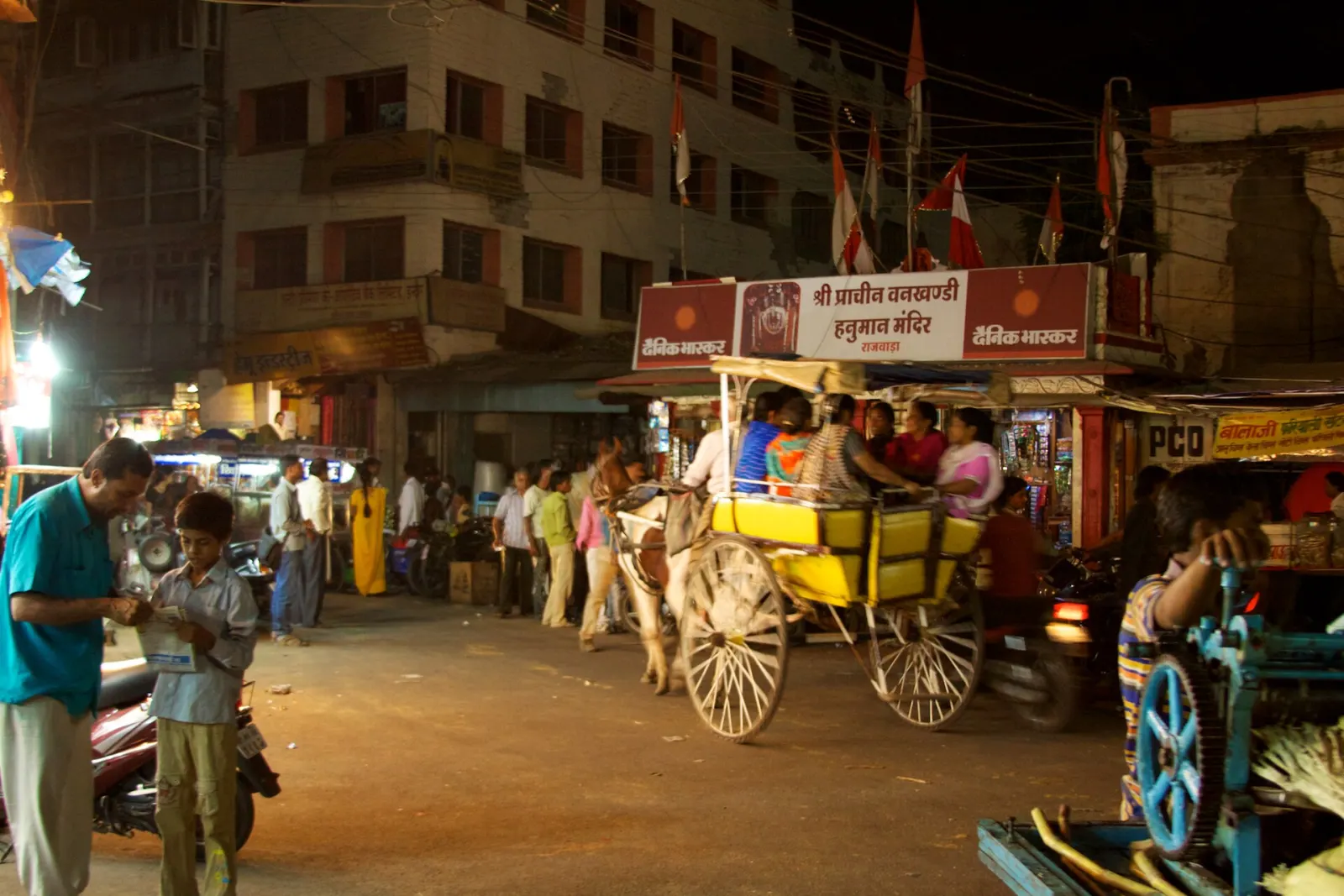
A street like this is the real test. These are the constraints we design around and will always state.
- Camera-based detection is affected by lighting, weather, occlusion and camera placement. We test and report under each.
- Adaptive control needs reliable detection. Where data is poor, junctions fall back to safe fixed plans.
- Connectivity at the roadside varies. Edge devices keep working locally and resynchronise later.
- Automated enforcement can be wrong. Every flagged event is evidence for review by an officer, never a decision.
Let's solve it together
Researchers, engineers and integrators: if you work on sensing, control or city data, we would like to compare notes.